EV Brake Maintenance Myths Hudsonville MI Drivers Should Know
If you recently made the switch to an electric vehicle, congratulations. Whether you are cruising down Baldwin Street, merging onto I-196, or picking up the kids near Hudsonville High School, your EV is quietly doing something impressive every time you lift your foot off the accelerator. It is slowing itself down through regenerative braking, converting kinetic energy back into battery power instead of burning it off as heat.
That is genuinely remarkable technology. But here is where I need to stop you before a common misconception costs you a significant repair bill or, worse, puts you in a dangerous situation.
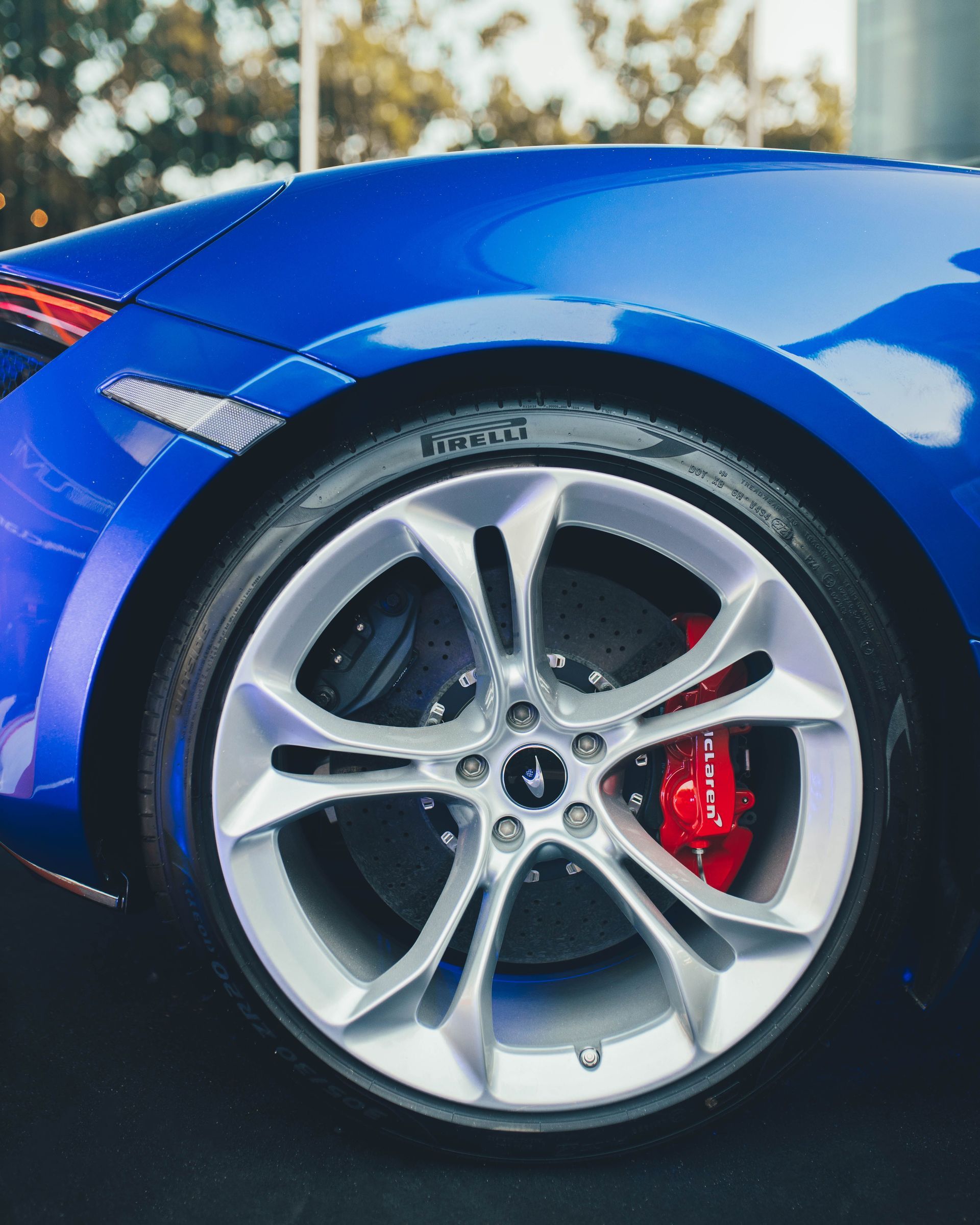
Your electric vehicle still has traditional brakes. And in some ways, those brakes need attention more urgently than the ones on a conventional gas-powered car.
The Regenerative Braking Myth That Is Costing EV Owners Money
One of the most frequent conversations our team has with EV owners goes something like this: they come in for an unrelated service, I mention the brakes should be inspected, and they look at me like I just told them their car runs on gasoline. "But I barely use my brakes," they say. "The regenerative system handles everything."
And they are not entirely wrong. Regenerative braking does handle a large portion of everyday deceleration. In normal stop-and-go driving around Hudsonville, through the Georgetown Township corridor, or on the slower stretches near the Hudsonville Fairgrounds, your friction brakes may barely engage at all.
That is precisely the problem.
What Happens to Brakes That Do Not Get Used?
Traditional brake systems were designed with regular use in mind. Brake pads, rotors, and calipers function best when they experience consistent friction and heat cycles. That regular contact actually helps keep components clean, clear of surface rust, and moving freely.
When those components sit largely dormant, as they often do in an EV being driven gently around town, the following happens.
Surface rust develops on rotors. Michigan weather does not help here. If you have ever parked your vehicle overnight during one of our damp West Michigan springs and noticed a slight grinding sound the next morning, that is surface rust forming on your rotors. In a conventional vehicle, this typically gets scrubbed off quickly. In an EV where the friction brakes are rarely fully engaged, that rust layer can become more significant over time.
Calipers can seize. Brake calipers contain pistons and slide pins that need regular movement to stay lubricated and functional. Extended periods of minimal use, especially combined with Michigan road salt and humidity, can cause calipers to stick or seize entirely. A seized caliper does not release properly, which creates uneven braking, accelerated pad wear, and a very expensive repair.
Brake fluid absorbs moisture. This one applies to every vehicle regardless of powertrain, but EV owners who skip routine service intervals are often unaware that brake fluid degrades over time. Moisture absorption lowers the boiling point of the fluid, which can cause brake fade during hard stops when you do actually need those friction brakes to perform, like a sudden panic stop on M-121 or navigating a slick interchange during a January snowstorm.
What Consumer Reports Found About EV Braking Safety
The concerns around EV braking go beyond just corrosion and maintenance neglect. Consumer Reports conducted real-world testing on more than two dozen electric vehicles and uncovered a safety issue that every EV owner should know about.
Their testing found that some EVs, when set to aggressive regenerative braking modes commonly called one-pedal driving, do not illuminate brake lights when the vehicle is rapidly slowing down. That means drivers behind you may have no visual warning that your vehicle is decelerating quickly.
Jennifer Stockburger, Director of Operations at the Consumer Reports Auto Test Center, put it plainly: "It's very difficult to judge how rapidly a vehicle ahead is slowing down without the visual cue of their brake lights. The lack of that visual aid from some EVs could lead to potentially dangerous situations in which other cars fail to maintain a consistent following gap."
Think about what that means on a busy stretch of Chicago Drive or during school pickup near Downtown Hudsonville. If the driver behind you does not know you are stopping, the consequences can be serious.
Consumer Reports identified this brake light issue on several popular models including the Hyundai Ioniq 5, Kia EV6, Kia Niro EV, Genesis GV60, and Genesis Electrified GV70. Hyundai, Genesis, and Kia have since announced software updates to address the issue, but it underscores a broader point that regenerative braking technology, as impressive as it is, introduces new variables that drivers and technicians need to stay on top of.
The U.S. government currently has no explicit standard requiring brake lights to illuminate at a specific deceleration rate, which means the responsibility falls on you as a driver to understand how your vehicle behaves and to keep your entire braking system in proper working order.
What EV Brake Maintenance Actually Looks Like
I am not telling you that your brakes are wearing out faster than a gas-powered car. In most cases, they are wearing out slower. But slower wear does not mean no wear, and it definitely does not mean no maintenance.
Here is what responsible EV brake service includes and how often you should think about it.
A thorough brake inspection should happen at least once a year regardless of mileage. During that inspection, a qualified technician should measure rotor thickness, check for scoring and rust pitting, test caliper movement, inspect pad depth, and evaluate brake fluid condition.
Brake fluid should typically be flushed every two to three years. Some manufacturers recommend more frequent intervals. Check your owner's manual and do not skip this service just because your pads look fine.
If your EV sits for extended periods, such as a second vehicle or a seasonal driver, have the brakes inspected before returning it to regular use.
Your electric vehicle is a significant investment. The roads around Hudsonville, from Port Sheldon Street to Chicago Drive, deserve a vehicle with a fully functional braking system. Do not let a well-intentioned myth stand between you and the safety your family depends on.
Contact Us
Address:
2844 Port Sheldon St, Hudsonville, MI 49426
Phone:
(616) 669-6630
Hours: Mon, Tue, Thu: 8:00 AM - 5:30 PM
Wed and Fri: 8:00 AM - 5:00 PM